| 产品介绍 |
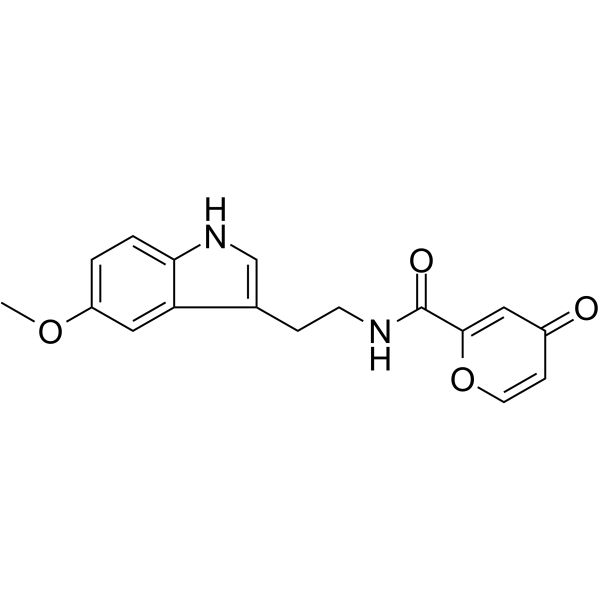
Piromelatine (Neu-P11) 是褪黑素受体 MT1/MT2 的激动剂,是 5-HT1A 和 5-HT1D 的激动剂,也是 5-HT2B 的拮抗剂。Piromelatine (Neu-P11) 有用于促进睡眠、缓解疼痛、抗神经退行性和抗抑郁等研究的潜能。Piromelatine (Neu-P11) 还具有抑制疼痛相关靶点 P2X3、TRPV1和 Nav1.7 通道的活性。
|
|---|
| 生物活性 |
Piromelatine (Neu-P11) is a melatonin MT1/MT2 receptor agonist, serotonin 5-HT1A/5-HT1D agonist, and serotonin 5-HT2B antagonist. Piromelatine (Neu-P11) possesses sleep promoting, analgesic, anti-neurodegenerative, anxiolytic and antidepressant potentials. Piromelatine (Neu-P11) also possesses pain-related P2X3, TRPV1, and Nav1.7 channel-inhibition capacities.
|
|---|
| 体外研究 | |
|---|
| 体内研究 |
Piromelatine (20 mg/kg, ip, daily) treatment prevents insulin resistance induced by sleep restriction.
Piromelatine (5-50 mg/kg, ip, daily) decreases plasma glucose significantly.
Piromelatine (100 mg/kg) decreases thermal hyperalgesia and mechanical allodynia in PSL (partial sciatic nerve ligation) mice.
西域 has not independently confirmed the accuracy of these methods. They are for reference only.
| Animal Model: |
Twenty four male Sprague-Dawley rats (3 months old, weighing 250-300 g). |
| Dosage: |
20 mg/kg. |
| Administration: |
IP, daily at 8:00 p.m. |
| Result: |
Resulted in significantly decreased plasma glucose levels (6.670.35 mmol/L, 6.770.34 mmol/L vs. 8.27 0.38 mmol/L), and the plasma glucose levels of the two groups were even neared to that of the normal control group (6.07±0.35 mmol/L).
Resulted in a decrease in triglycerides and total cholesterol levels (51.8% and
43.0%, respectively) and an elevation in HDL-C level (increase of 32.4%).
|
| Animal Model: |
Five groups of 12-wk-old rats (10/group). |
| Dosage: |
5-50 mg/kg. |
| Administration: |
Intraperitoneal injection in 18:00 every day. |
| Result: |
Plasma glucose was decreased significantly by 27.3%, 34.5% and 61.5%, respectively. |
| Animal Model: |
Male C57BL/6 J mice, weighing 22-26 g (10 weeks old; PSL mice). |
| Dosage: |
25, 50, or 100 mg/kg. |
| Administration: |
IP 1 h before assessment of thermal hyperalgesia and mechanical allodynia. |
| Result: |
Remarkably prolonged thermal latency (surgery×treatment interaction, F1,24=15.7, p<0.001; surgery×treatment×hours interaction, F5,120=3.0, p<0.05) and increased mechanical threshold (surgery×treatment interaction, F1,24=18.4, p<0.001; surgery× treatment×hours interaction, F5,120=2.6, p<0.05) for 4 h after administration of piromelatine to PSL mice. |
|
|---|
| 体内研究 |
Piromelatine (20 mg/kg, ip, daily) treatment prevents insulin resistance induced by sleep restriction.
Piromelatine (5-50 mg/kg, ip, daily) decreases plasma glucose significantly.
Piromelatine (100 mg/kg) decreases thermal hyperalgesia and mechanical allodynia in PSL (partial sciatic nerve ligation) mice.
西域 has not independently confirmed the accuracy of these methods. They are for reference only.
| Animal Model: |
Twenty four male Sprague-Dawley rats (3 months old, weighing 250-300 g). |
| Dosage: |
20 mg/kg. |
| Administration: |
IP, daily at 8:00 p.m. |
| Result: |
Resulted in significantly decreased plasma glucose levels (6.670.35 mmol/L, 6.770.34 mmol/L vs. 8.27 0.38 mmol/L), and the plasma glucose levels of the two groups were even neared to that of the normal control group (6.07±0.35 mmol/L).
Resulted in a decrease in triglycerides and total cholesterol levels (51.8% and
43.0%, respectively) and an elevation in HDL-C level (increase of 32.4%).
|
| Animal Model: |
Five groups of 12-wk-old rats (10/group). |
| Dosage: |
5-50 mg/kg. |
| Administration: |
Intraperitoneal injection in 18:00 every day. |
| Result: |
Plasma glucose was decreased significantly by 27.3%, 34.5% and 61.5%, respectively. |
| Animal Model: |
Male C57BL/6 J mice, weighing 22-26 g (10 weeks old; PSL mice). |
| Dosage: |
25, 50, or 100 mg/kg. |
| Administration: |
IP 1 h before assessment of thermal hyperalgesia and mechanical allodynia. |
| Result: |
Remarkably prolonged thermal latency (surgery×treatment interaction, F1,24=15.7, p<0.001; surgery×treatment×hours interaction, F5,120=3.0, p<0.05) and increased mechanical threshold (surgery×treatment interaction, F1,24=18.4, p<0.001; surgery× treatment×hours interaction, F5,120=2.6, p<0.05) for 4 h after administration of piromelatine to PSL mice. |
|
|---|
| 性状 | Solid |
|---|
| 溶解性数据 |
In Vitro:
DMSO : 250 mg/mL (800.46 mM; Need ultrasonic)
配制储备液
|
浓度
溶剂体积
质量
|
1 mg |
5 mg |
10 mg |
| 1 mM |
3.2018 mL |
16.0092 mL |
32.0184 mL |
| 5 mM |
0.6404 mL |
3.2018 mL |
6.4037 mL |
| 10 mM |
0.3202 mL |
1.6009 mL |
3.2018 mL |
*
请根据产品在不同溶剂中的溶解度选择合适的溶剂配制储备液;一旦配成溶液,请分装保存,避免反复冻融造成的产品失效。 储备液的保存方式和期限:-80°C, 6 months; -20°C, 1 month (protect from light)。-80°C 储存时,请在 6 个月内使用,-20°C 储存时,请在 1 个月内使用。
In Vivo:
请根据您的实验动物和给药方式选择适当的溶解方案。以下溶解方案都请先按照 In Vitro 方式配制澄清的储备液,再依次添加助溶剂:
——为保证实验结果的可靠性,澄清的储备液可以根据储存条件,适当保存;体内实验的工作液,建议您现用现配,当天使用;
以下溶剂前显示的百 分比是指该溶剂在您配制终溶液中的体积占比;如在配制过程中出现沉淀、析出现象,可以通过加热和/或超声的方式助溶
-
1.
请依序添加每种溶剂: 10% DMSO 40% PEG300 5% Tween-80 45% saline Solubility: ≥ 2.08 mg/mL (6.66 mM); Clear solution
此方案可获得 ≥ 2.08 mg/mL (6.66 mM,饱和度未知) 的澄清溶液。 以 1 mL 工作液为例,取 100 μL 20.8 mg/mL 的澄清 DMSO 储备液加到 400 μL PEG300 中,混合均匀;向上述体系中加入50 μL Tween-80,混合均匀;然后继续加入 450 μL生理盐水定容至 1 mL。
-
2.
请依序添加每种溶剂: 10% DMSO 90% (20% SBE-β-CD in saline) Solubility: ≥ 2.08 mg/mL (6.66 mM); Clear solution
此方案可获得 ≥ 2.08 mg/mL (6.66 mM,饱和度未知) 的澄清溶液。 以 1 mL 工作液为例,取 100 μL 20.8 mg/mL 的澄清 DMSO 储备液加到 900 μL 20% 的 SBE-β-CD 生理盐水水溶液中,混合均匀。
*以上所有助溶剂都可在 西域 网站选购。
|
|---|
| 运输条件 |
Room temperature in continental US; may vary elsewhere.
|
|---|
| 储存方式 |
|
|---|
| 参考文献 | |
|---|