
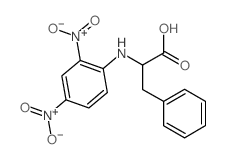
N-(2,4-二硝基苯基)-L-苯丙胺酸, 99%,N-(2,4-Dinitrophenyl)-L-phenylalanine
产品编号:西域试剂-WR139525| CAS NO:1655-54-5| MDL NO:MFCD00038099| 分子式:C15H13N3O6| 分子量:331.28
N-(2,4-二硝基苯基)-L-苯丙氨酸是丙氨酸衍生物。
本网站销售的所有产品仅用于工业应用或者科学研究等非医疗目的,不可用于人类或动物的临床诊断或者治疗,非药用,非食用,
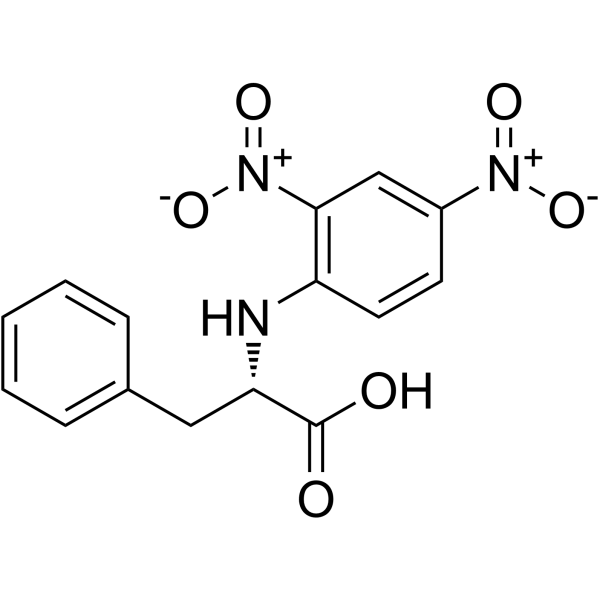
| 英文名称 | N-(2,4-Dinitrophenyl)-L-phenylalanine |
|---|---|
| CAS编号 | 1655-54-5 |
| 产品描述 | N-(2,4-二硝基苯基)-L-苯丙氨酸是丙氨酸衍生物。 |
| 产品熔点 | 187ºC |
| 产品沸点 | 588.5ºC at 760 mmHg |
| 产品密度 | 1.497 g/cm3 |
| 产品闪点 | 309.7ºC |
| 精确质量 | 331.08000 |
| PSA | 140.97000 |
| LogP | 3.73020 |
| 外观性状 | 亮黄色粉末 |
| 蒸气压 | 1.08E-14mmHg at 25°C |
| 折射率 | -94.5 ° (C=1, AcOH) |
| 体外研究 | 氨基酸和氨基酸衍生物已被商业化用作能量补充剂。它们影响合成代谢激素的分泌、运动期间的燃料供应、压力相关任务期间的精神表现,并防止运动引起的肌肉损伤。它们被认为是有益的能生膳食物质。 |
| 储存条件 | -20°C密封储存 |
相关文档
化学品安全说明书(MSDS)
下载MSDS质检证书(COA)
相关产品
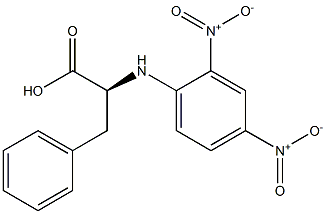
| 危险品运输编码 | 1325 |
|---|---|
| WGK德国 | 3 |
| 包装等级 | II |
| 海关编码 | 2922499990 |
|
N-(2,4-Dinitrophenyl)-L-phenylalanine
Revision number: 5
SAFETY DATA SHEET Section1. IDENTIFICATION Product name:N-(2,4-Dinitrophenyl)-L-phenylalanine Revision number:5 Section2. HAZARDS IDENTIFICATION GHS classification PHYSICAL HAZARDS Category 1 Flammable solids HEALTH HAZARDSNot classified Not classified ENVIRONMENTAL HAZARDS GHS label elements, including precautionary statements Pictograms or hazard symbols Signal wordDanger Hazard statementsFlammable solid Precautionary statements: [Prevention]Keep away from heat/sparks/open flames/hot surfaces. - No smoking. Use explosion-proof electrical/ventilating/lighting equipment. Wear protective gloves/eye protection/face protection. Section3. COMPOSITION/INFORMATION ON INGREDIENTS Substance/mixture:Substance N-(2,4-Dinitrophenyl)-L-phenylalanine Components: Percent:>98.0%(LC)(T) CAS Number:1655-54-5 Synonyms:N-Dnp-L-phenylalanine , Dnp-Phe-OH Chemical Formula:C15H13N3O6 Section4. FIRST AID MEASURES Remove victim to fresh air and keep at rest in a position comfortable for breathing. Inhalation: Get medical advice/attention if you feel unwell. Skin contact:Remove/Take off immediately all contaminated clothing. Rinse skin with water/shower. If skin irritation or rash occurs: Get medical advice/attention. Eye contact:Rinse cautiously with water for several minutes. Remove contact lenses, if present and easy to do. Continue rinsing. If eye irritation persists: Get medical advice/attention. Ingestion:Get medical advice/attention if you feel unwell. Rinse mouth. N-(2,4-Dinitrophenyl)-L-phenylalanine Protection of first-aiders: A rescuer should wear personal protective equipment, such as rubber gloves and air- tight goggles. Section5. FIRE-FIGHTING MEASURES Suitable extinguishingDry chemical, foam, water spray, carbon dioxide. media: Specific hazards arising Explosion risk in case of fire. Fight fire remotely due to the risk of explosion. from the chemical:Take care as it may decompose upon combustion or in high temperatures to generate poisonous fume. Precautions for firefighters: Fire-extinguishing work is done from the windward and the suitable fire-extinguishing method according to the surrounding situation is used. Uninvolved persons should evacuate to a safe place. In case of fire in the surroundings: Keep containers cool by spraying with water. Eliminate all ignition sources if safe to do so. Special protectiveWhen extinguishing fire, be sure to wear personal protective equipment. equipment for firefighters: Section6. ACCIDENTAL RELEASE MEASURES Use personal protective equipment. Keep people away from and upwind of spill/leak. Personal precautions, protective equipment and Entry to non-involved personnel should be controlled around the leakage area by emergency procedures: roping off, etc. Environmental precautions: Prevent product from entering drains. Methods and materials for Sweep dust to collect it into an airtight container, taking care not to disperse it. containment and cleaning Adhered or collected material should be promptly disposed of, in accordance with up: appropriate laws and regulations. Prevention of secondary Remove all sources of ignition. Fire-extinguishing devices should be prepared in hazards:case of a fire. Use spark-proof tools and explosion-proof equipment. Section7. HANDLING AND STORAGE Precautions for safe handling Technical measures:Handling is performed in a well ventilated place. Wear suitable protective equipment. Be careful not to cause leakage, overflow, or dispersion. Steam should not be generated unnecessarily. Keep away from heat/sparks/open flame/hot surfaces. -No smoking. Take measures to prevent the build up of electrostatic charge. Use explosion-proof equipment. Avoid shock and friction. Wash hands and face before breaks and immediately after handling the product. Use a local exhaust if dust or aerosol will be generated. Advice on safe handling: Avoid contact with skin, eyes and clothing. Conditions for safe storage, including any incompatibilities Storage conditions:Keep container tightly closed. Store in a cool and dark place. Be sure not to give the container unexpected impacts, such as falling down or falling off. Store away from incompatible materials such as oxidizing agents. Packaging material:Comply with laws. Section8. EXPOSURE CONTROLS / PERSONAL PROTECTION Engineering controls:Install a closed system or local exhaust. Also install safety shower and eye bath. Personal protective equipment Respiratory protection: Dust respirator. Follow local and national regulations. Hand protection:Protective gloves. Eye protection:Safety glasses. A face-shield, if the situation requires. Skin and body protection: Protective clothing. Protective boots, if the situation requires. Section9. PHYSICAL AND CHEMICAL PROPERTIES Physical state (20°C):Solid Form:Crystal- Powder Colour:Pale yellow - Yellow Odour:No data available N-(2,4-Dinitrophenyl)-L-phenylalanine Section9. PHYSICAL AND CHEMICAL PROPERTIES pH: No data available Melting point/freezing point:187°C Boiling point/range:No data available Flash point:No data available Flammability or explosive limits: Lower:No data available Upper:No data available Relative density:No data available Solubility(ies): [Water]No data available [Other solvents]No data available Section10. STABILITY AND REACTIVITY Chemical stability:Stable under proper conditions. Possibility of hazardous May explosively decompose on heating, shock, friction, etc. reactions: Conditions to avoid:Heat, Spark, Open flame, Static discharge, Shock, Friction Incompatible materials: Oxidizing agents Hazardous decomposition Carbon monoxide, Carbon dioxide, Nitrogen oxides (NOx) products: Section11. TOXICOLOGICAL INFORMATION Acute Toxicity:No data available Skin corrosion/irritation: No data available Serious eyeNo data available damage/irritation: Germ cell mutagenicity: No data available Carcinogenicity: IARC =No data available NTP =No data available Reproductive toxicity:No data available Section12. ECOLOGICAL INFORMATION Ecotoxicity: Fish:No data available Crustacea:No data available No data available Algae: Persistence / degradability: No data available No data available Bioaccumulative potential(BCF): Mobility in soil Log Pow:No data available Soil adsorption (Koc):No data available Henry's LawNo data available constant(PaM3/mol): Section13. DISPOSAL CONSIDERATIONS Recycle to process, if possible. Consult your local regional authorities and an expert of disposal. You may be able to dissolve or mix material with a combustible solvent and little by little burn in a chemical incinerator equipped with an afterburner and scrubber system. If a large amount of the substance is burned at a time, an explosion may occur. Observe all federal, state and local regulations when disposing of the substance. Section14. TRANSPORT INFORMATION Hazards Class:4.1: Flammable solid. UN-No:1325 N-(2,4-Dinitrophenyl)-L-phenylalanine Section14. TRANSPORT INFORMATION Proper shipping name:Flammable solid, organic, n.o.s. Packing group:II Section15. REGULATORY INFORMATION Safe management ordinance of dangerous chemical product (State Council announces on January 26, 2002 and revised on February 16,2011): Safe use and production, the storage of a dangerous chemical, transport, loading and unloading were prescribed. SECTION 16 - ADDITIONAL INFORMATION N/A |
|
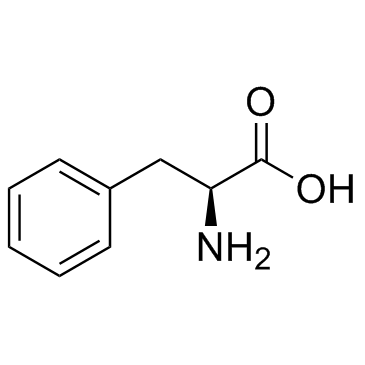
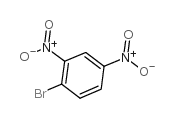
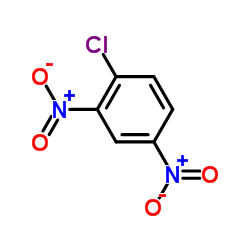
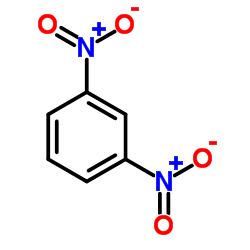
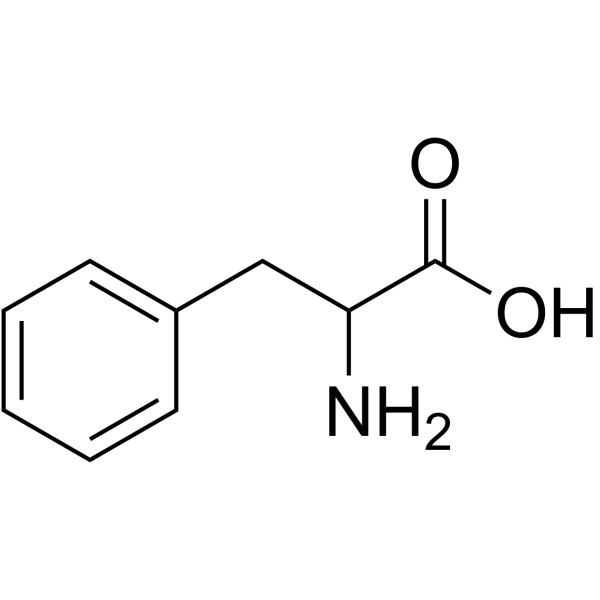
~91%
1655-54-5 |
| 文献:Cherng, Yie-Jia Tetrahedron, 2000 , vol. 56, # 42 p. 8287 - 8289 |
|
~55%
1655-54-5 |
| 文献:Cherng, Yie-Jia Tetrahedron, 2000 , vol. 56, # 42 p. 8287 - 8289 |
|
~60%
1655-54-5 |
| 文献:Cherng, Yie-Jia Tetrahedron, 2000 , vol. 56, # 42 p. 8287 - 8289 |
|
~%
1655-54-5 |
| 文献:Journal of Labelled Compounds and Radiopharmaceuticals, , vol. 43, # 5 p. 449 - 461 |
|
~%
1655-54-5 |
| 文献:Chemical and Pharmaceutical Bulletin, , vol. 35, # 4 p. 1347 - 1352 |






 浙公网安备 33010802013016号