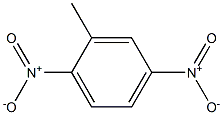
2,5-二硝基甲苯, 98%,2,5-Dinitrotoluene
产品编号:西域试剂-WR179488| CAS NO:619-15-8| 分子式:C7H6N2O4| 分子量:182.130
本网站销售的所有产品仅用于工业应用或者科学研究等非医疗目的,不可用于人类或动物的临床诊断或者治疗,非药用,非食用,
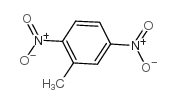
| 产品名称 | 2,5-二硝基甲苯, 98% |
|---|---|
| 英文名称 | 2,5-Dinitrotoluene |
| CAS编号 | 619-15-8 |
| 产品熔点 | 52.5ºC |
| 产品沸点 | 313.6ºC at 760 mmHg |
| 产品密度 | 1.407 g/cm3 |
| 产品闪点 | 157.1ºC |
| 精确质量 | 182.03300 |
| PSA | 91.64000 |
| LogP | 2.85780 |
| 折射率 | 1.598 |
相关文档
化学品安全说明书(MSDS)
下载MSDS质检证书(COA)
相关产品
| 危害码 (欧洲) | T: Toxic;N: Dangerous for the environment; |
|---|---|
| 风险声明 (欧洲) | R45 |
Synonym:2,5-DNT; 2-Methyl-1,4-dinitrobenzene Section 2 - COMPOSITION, INFORMATION ON INGREDIENTS
Risk Phrases: 23/24/25 45 48/22 62 51/53 Section 3 - HAZARDS IDENTIFICATION EMERGENCY OVERVIEW
Toxic by inhalation, in contact with skin and if swallowed. May cause cancer. Harmful : danger of serious damage to health by prolonged exposure if swallowed. Possible risk of impaired fertility. Toxic to aquatic organisms, may cause long-term adverse effects in the aquatic environment. Potential Health Effects Eye: May cause eye irritation. Skin: May cause skin irritation. Absorption into the body may cause cyanosis (bluish discoloration of skin due to deficient oxygenation of the blood). Ingestion: May cause irritation of the digestive tract. Methemoglobinemia is characterized by dizziness, drowsiness, headache, shortness of breath, cyanosis (bluish discoloration of skin due to deficient oxygenation of the blood), rapid heart rate and chocolate-brown colored blood. May be harmful if swallowed. May form methemoglobin which in sufficient concentration causes cyanosis (bluish discoloration of skin due to deficient oxygenation of the blood). Inhalation: May cause respiratory tract irritation. May cause methemoglobinemia, cyanosis (bluish discoloration of skin due to deficient oxygenation of the blood), convulsions, tachycardia, dyspnea (labored breathing), and death. Methemoglobinemia is characterized by dizziness, drowsiness, headache, shortness of breath, cyanosis (bluish discoloration of skin due to deficient oxygenation of the blood), rapid heart rate and chocolate-brown blood. Chronic: May cause methemoglobinemia, which is characterized by chocolate-brown colored blood, headache, weakness, dizziness, breath shortness, cyanosis (bluish skin due to deficient oxygenation of blood), rapid heart rate, unconsciousness and possible death. May cause cancer according to animal studies. Section 4 - FIRST AID MEASURES Eyes: Flush eyes with plenty of water for at least 15 minutes, occasionally lifting the upper and lower eyelids. Get medical aid. Skin: Get medical aid. Flush skin with plenty of water for at least 15 minutes while removing contaminated clothing and shoes. Wash clothing before reuse. Ingestion: Never give anything by mouth to an unconscious person. Get medical aid. Do NOT induce vomiting. If conscious and alert, rinse mouth and drink 2-4 cupfuls of milk or water. Inhalation: Remove from exposure and move to fresh air immediately. If not breathing, give artificial respiration. If breathing is difficult, give oxygen. Get medical aid. Do NOT use mouth-to-mouth resuscitation. Notes to Physician: For methemoglobinemia, administer oxygen alone or with Methylene Blue depending on the methemoglobin concentration in the blood. Antidote: Methylene blue, alone or in combination with oxygen is indicated as a treatment in nitrite induced methemoglobinemia. Section 5 - FIRE FIGHTING MEASURES General Information: As in any fire, wear a self-contained breathing apparatus in pressure-demand, MSHA/NIOSH (approved or equivalent), and full protective gear. During a fire, irritating and highly toxic gases may be generated by thermal decomposition or combustion. Use water with caution and in flooding amounts. Containers may explode when heated. Combustible material; may burn but does not ignite readily. Extinguishing Media: Do NOT get water inside containers. For small fires, use dry chemical, carbon dioxide, or water spray. For large fires, use water spray, fog or regular foam. Cool containers with flooding quantities of water until well after fire is out. Section 6 - ACCIDENTAL RELEASE MEASURES General Information: Use proper personal protective equipment as indicated in Section 8. Spills/Leaks: Vacuum or sweep up material and place into a suitable disposal container. Avoid runoff into storm sewers and ditches which lead to waterways. Clean up spills immediately, observing precautions in the Protective Equipment section. Avoid generating dusty conditions. Provide ventilation. Section 7 - HANDLING and STORAGE Handling: Wash thoroughly after handling. Remove contaminated clothing and wash before reuse. Use with adequate ventilation. Minimize dust generation and accumulation. Avoid contact with eyes, skin, and clothing. Keep container tightly closed. Avoid ingestion and inhalation. Storage: Store in a tightly closed container. Store in a cool, dry, well-ventilated area away from incompatible substances. Section 8 - EXPOSURE CONTROLS, PERSONAL PROTECTION Engineering Controls: Use process enclosure, local exhaust ventilation, or other engineering controls to control airborne levels below recommended exposure limits. Facilities storing or utilizing this material should be equipped with an eyewash facility and a safety shower. Exposure Limits CAS# 619-15-8: CAS# 25321-14-6: United States OSHA: 1.5 mg/m3 TWA Belgium - TWA: 0.15 mg/m3 VLE Malaysia: 0.2 mg/m3 TWA Spain: 0.15 mg/m3 VLA-ED Personal Protective Equipment Eyes: Wear appropriate protective eyeglasses or chemical safety goggles as described by OSHA's eye and face protection regulations in 29 CFR 1910.133 or European Standard EN166. Skin: Wear appropriate protective gloves to prevent skin exposure. Clothing: Wear appropriate protective clothing to prevent skin exposure. Respirators: A respiratory protection program that meets OSHA's 29 CFR 1910.134 and ANSI Z88.2 requirements or European Standard EN 149 must be followed whenever workplace conditions warrant respirator use. Section 9 - PHYSICAL AND CHEMICAL PROPERTIES Physical State: Powder Color: yellow Odor: toluene-like odor pH: Not available. Vapor Pressure: Not available. Viscosity: Not available. Boiling Point: Not available. Freezing/Melting Point: 53 deg C Autoignition Temperature: Not applicable. Flash Point: Not applicable. Explosion Limits, lower: Not available. Explosion Limits, upper: Not available. Decomposition Temperature: Solubility in water: Specific Gravity/Density: 1.2800g/cm3 Molecular Formula: C7H6N2O4 Molecular Weight: 182.14 Section 10 - STABILITY AND REACTIVITY Chemical Stability: Stable under normal temperatures and pressures. Conditions to Avoid: Incompatible materials, dust generation, excess heat, strong oxidants. Incompatibilities with Other Materials: Metals, strong oxidizing agents, caustics (e.g. ammonia, ammonium hydroxide, calcium hydroxide, potassium hydroxide, sodium hydroxide). Hazardous Decomposition Products: Nitrogen oxides, carbon monoxide, irritating and toxic fumes and gases, carbon dioxide. Hazardous Polymerization: Has not been reported Section 11 - TOXICOLOGICAL INFORMATION RTECS#: CAS# 619-15-8: XT1750000 CAS# 25321-14-6: XT1300000 LD50/LC50: CAS# 619-15-8: Draize test, rabbit, skin: 500 mg/24H Moderate; Oral, mouse: LD50 = 652 mg/kg; Oral, rat: LD50 = 517 mg/kg. CAS# 25321-14-6: Oral, mouse: LD50 = 750 mg/kg. Carcinogenicity: 2,5-Dinitrotoluene - Not listed by ACGIH, IARC, or NTP. Dinitrotoluene (mixed isomers) - ACGIH: A3 - Confirmed animal carcinogen with unknown relevance to California: carcinogen, initial date 5/1/96 Other: See actual entry in RTECS for complete information. Section 12 - ECOLOGICAL INFORMATION Other No information available. Section 13 - DISPOSAL CONSIDERATIONS Dispose of in a manner consistent with federal, state, and local regulations. Section 14 - TRANSPORT INFORMATION IATA Shipping Name: DINITROTOLUENES Hazard Class: 6.1 UN Number: 2038 Packing Group: II IMO Shipping Name: DINITROTOLUENES Hazard Class: 6.1 UN Number: 2038 Packing Group: II RID/ADR Shipping Name: DINITROTOLUENES Hazard Class: 6.1 UN Number: 2038 Packing group: II USA RQ: CAS# 25321-14-6: 10 lb final RQ; 4.54 kg final RQ Section 15 - REGULATORY INFORMATION European/International Regulations European Labeling in Accordance with EC Directives Hazard Symbols: T N Risk Phrases: R 45 May cause cancer. R 23/24/25 Toxic by inhalation, in contact with skin and if swallowed. R 48/22 Harmful : danger of serious damage to health by prolonged exposure if swallowed. R 51/53 Toxic to aquatic organisms, may cause long-term adverse effects in the aquatic environment. R 62 Possible risk of impaired fertility. Safety Phrases: S 53 Avoid exposure - obtain special instructions before use. S 45 In case of accident or if you feel unwell, seek medical advice immediately (show the label where possible). S 61 Avoid release to the environment. Refer to special instructions/safety data sheets. WGK (Water Danger/Protection) CAS# 619-15-8: 3 CAS# 25321-14-6: No information available. Canada CAS# 619-15-8 is listed on Canada's NDSL List. CAS# 25321-14-6 is listed on Canada's DSL List. CAS# 619-15-8 is not listed on Canada's Ingredient Disclosure List. CAS# 25321-14-6 is listed on Canada's Ingredient Disclosure List. US FEDERAL TSCA CAS# 619-15-8 is listed on the TSCA inventory. CAS# 25321-14-6 is listed on the TSCA inventory. SECTION 16 - ADDITIONAL INFORMATION N/A |





 浙公网安备 33010802013016号